
How to Read an Economic Calendar
Interest rate decisions, inflation figures and employment reports can all influence financial markets. For traders, knowing when those announcements are due is often just as important as understanding what they mean.
An economic calendar brings those events together in one place. It helps you see what is coming up, which currencies or markets may be affected and how the latest result compares with expectations.
Whether you are placing your first trade or already follow the markets regularly, here is how to make an economic calendar part of your preparation.
Key takeaways
- An economic calendar shows scheduled data releases and events that may affect markets.
- The difference between the actual result and the forecast can matter more than whether the number looks positive or negative on its own.
- Major announcements can bring wider spreads, rapid price changes and slippage.
- Kudo’s economic calendar displays event times in UTC, so check the conversion to your local time.
What is an economic calendar?
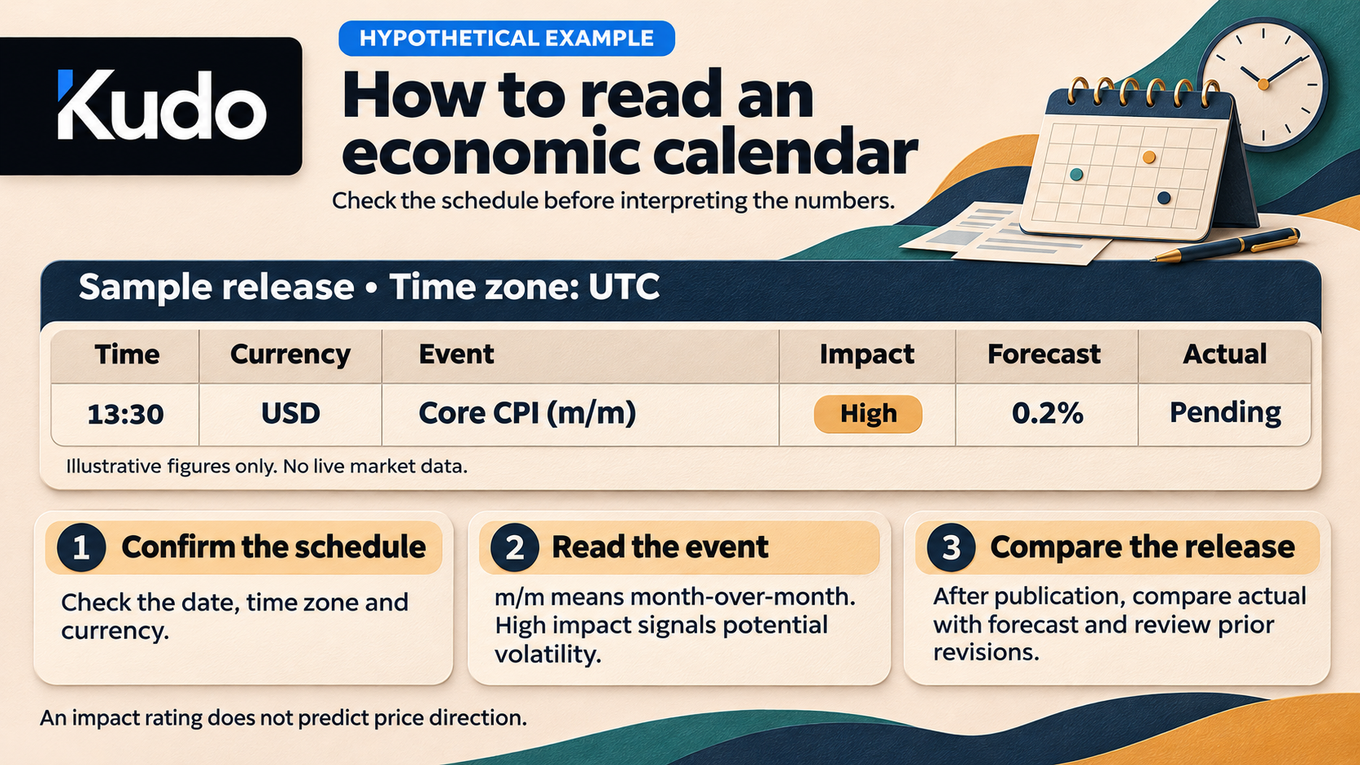
An economic calendar lists upcoming announcements from central banks, governments and other organisations. Common examples include inflation reports, interest rate decisions, employment data and GDP figures.
Each event usually shows the time of the release, the country or currency involved and an indication of its expected impact. Once the data is published, the calendar may also show the actual result alongside the forecast and previous reading.
You can explore upcoming announcements using the Kudo economic calendar, which includes impact filters to help you focus on the events most relevant to you.
Actual, forecast and previous: what do they mean?
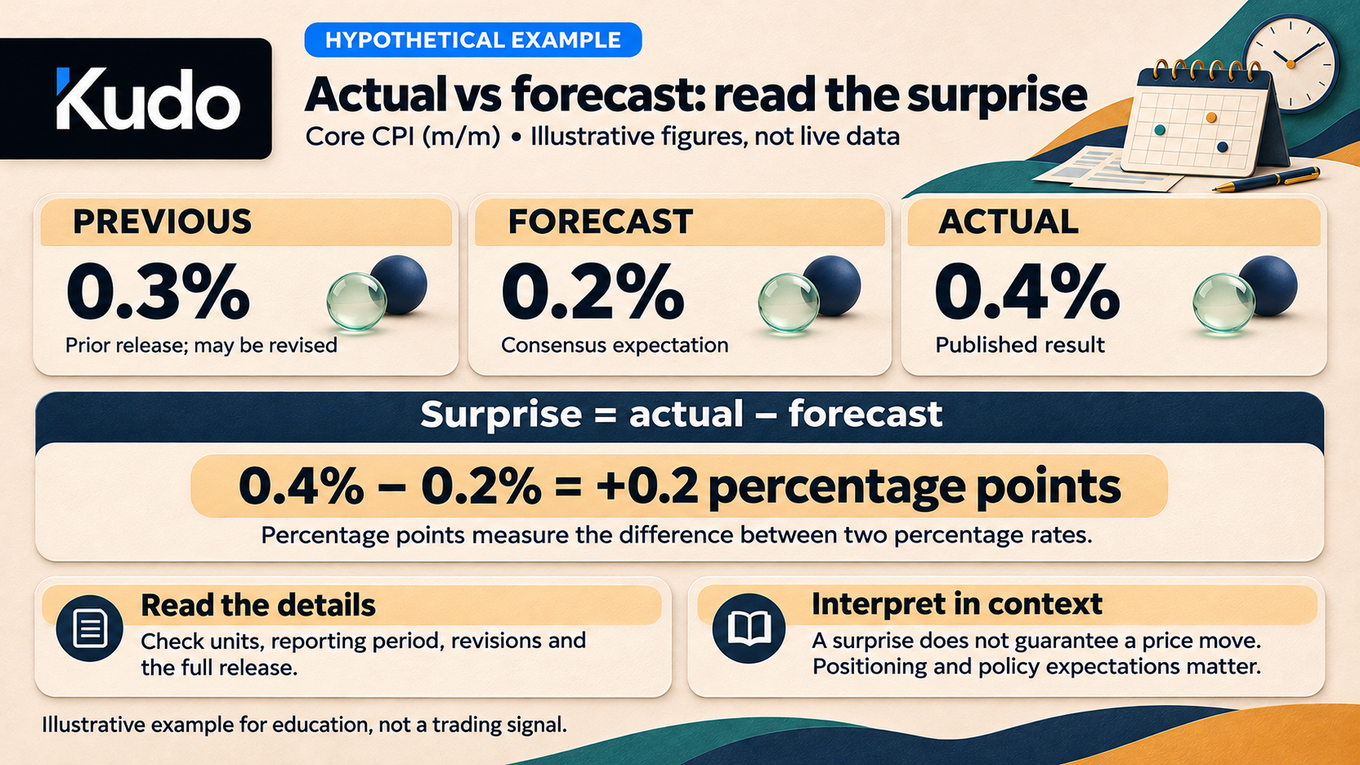
Three figures appear regularly on an economic calendar:
- Previous: the result from the last reporting period. This can sometimes be revised later.
- Forecast: the market’s estimate before the announcement.
- Actual: the figure released by the relevant organisation.
For example, imagine annual inflation was previously 2.5%, while economists forecast 2.3%. If the actual figure is 2.6%, inflation has risen against the previous reading and come in above expectations.
That surprise could influence expectations about future interest rates. It does not, however, guarantee that a currency will rise or fall. Traders may already have priced in a different outcome, or other details in the report may matter more than the headline figure.
Which events should European traders watch?
The events that matter most depend on the instruments you trade. A trader following EUR/USD, for example, may want to watch both eurozone and US data.
European Central Bank decisions: Interest rate announcements and accompanying commentary can affect expectations for the euro and European markets.
Eurozone inflation and GDP: These releases provide insight into price pressures and economic growth. Individual-country data can also attract attention before wider eurozone figures.
Bank of England announcements: Traders following GBP pairs may watch UK interest rate decisions, inflation and employment releases.
US data and Federal Reserve decisions: US inflation, employment data and Fed announcements can influence the US dollar, which is involved in many major currency pairs. They can also affect gold, indices and other markets.
A high-impact label is a useful prompt to prepare, not a guarantee of a large move. Equally, an event labelled lower impact can still matter if its result is unexpected or arrives alongside other news.
Check the time zone before trading
Kudo’s calendar displays times in UTC. Your local time may differ depending on where you are and whether daylight saving time is in effect.
For example, Central European Time is normally UTC+1 in winter and UTC+2 in summer. The UK is normally UTC in winter and UTC+1 in summer. The US and Europe change their clocks on different dates, so the local time of a recurring US release can shift during the weeks between those changes.
Check the date as well as the time whenever you are planning around an announcement.
How to prepare for a high-impact announcement
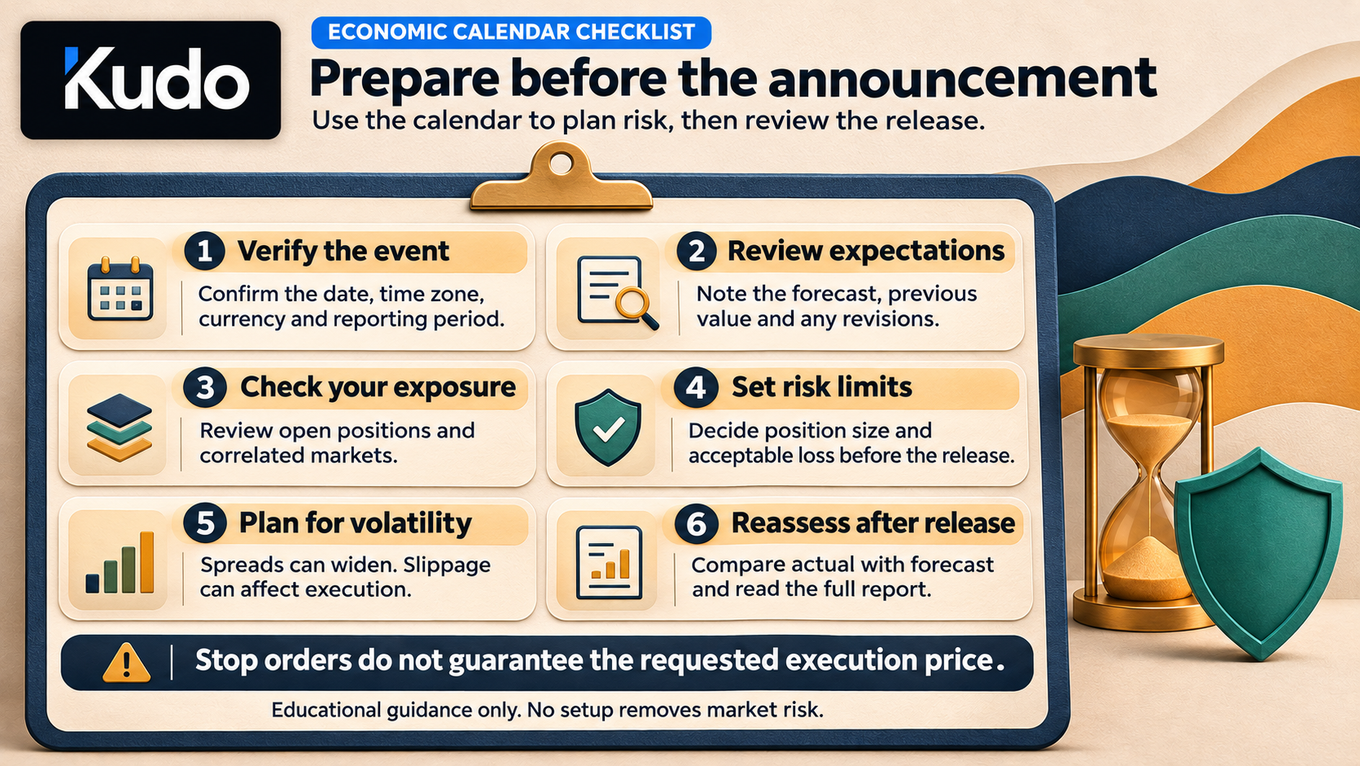
Before an important release, consider:
- Which open positions or pending orders could be affected?
- What is the forecast, and has the previous figure been revised?
- Are several positions exposed to the same currency or market theme?
- Is the position size appropriate for the potential volatility?
- Could spreads widen or execution differ from the price you expect?
Stop-loss orders can help manage risk, but a standard stop does not guarantee execution at the selected price. During fast markets or price gaps, the actual fill may differ. You can learn more in Kudo’s position-sizing lesson.
More experienced traders may also consider whether the market’s reaction is being driven by the headline number, details within the release, revisions or central-bank guidance. It is possible for a market to move in one direction initially and reverse as participants digest the information.
Practise reading the calendar
You don’t need to trade every announcement. Following the forecast, actual result and subsequent market reaction can be a useful learning exercise on its own.
If you want to practise in a trading environment, a Kudo demo account lets you explore with virtual funds. Remember that demo conditions may not reproduce every aspect of live execution.
Frequently asked questions
Is a higher-than-expected result always good for a currency?
No. The effect depends on the type of data, market expectations and the wider economic picture. A strong headline may already be priced in, while other details can change how traders interpret it.
Should beginners trade during major announcements?
Beginners may prefer to observe first. High-impact releases can produce rapid movements and execution risks that are difficult to manage, especially when using leverage.
Does an economic calendar predict market direction?
No. It shows scheduled events and available data. It cannot reliably predict how the market will react.